What Is Sound Healing?
A Complete Guide
Your introduction to vibrational sound therapy, including what is sound healing, how it works, and how to experience it.
Skip to sound healing benefits → Skip to sound healing experiences →
Sound healing, also called vibrational sound therapy, sound therapy, or healing with sound, is something humans have been doing for as long as we have made sound together. At its core, it is the intentional use of vibration, resonance, and frequency to support the body’s natural ability to regulate, restore, and rebalance.
When I work with someone in a session, what I’m doing is giving their nervous system a frequency-based signal that it’s safe to release, relax and rebalance. The science now explains what ancient practitioners understood intuitively, that the body responds to therapeutic sound at a measurable physiological level, and that response can be profound. In modern times, sound healing is a complementary wellness practice used alongside other approaches to support whole-body health and wellbeing. Let’s dive into what sound healing is, and how it may help your body and mind.
What is Sound Healing?
Sound healing is the intentional use of sound and vibration to support health, well-being, and inner balance. It is based on a principle that runs through ancient traditions and modern physics alike — that everything in the universe, including the human body, exists in a state of vibration. When the body’s natural vibratory patterns are disrupted by stress, illness, trauma, or emotional weight, therapeutic sound can help restore coherence and balance.
Sound healing therapy is sometimes called vibrational sound therapy, sound medicine, or healing with sound. The instruments used, the practitioner’s approach, and the format of the session vary, but the underlying principle is consistent across all traditions and modalities. Sound is not merely pleasant. It is physiologically active in the body, and it has been used as medicine for as long as human beings have made it.
Jonathan Goldman, one of the foremost researchers and teachers in the field, describes this through his foundational formula: Frequency + Intention = Healing. It is not sound alone that heals, but sound used with conscious intention, a principle that bridges the ancient and the modern in this practice.
A Brief History of Sound Healing
Sound healing therapy is not a wellness trend. It is one of the oldest therapeutic practices known to humanity and what strikes me most is that it appeared independently across cultures separated by entire oceans and thousands of years. The Aboriginal peoples of Australia. The priests of ancient Egypt. The philosophers of ancient Greece. The sages of India. None of them were talking to each other. And yet they all arrived at the same understanding — that sound is medicine.
The Aboriginal people of Australia are the earliest known culture to use sound as medicine. Their yidaki, known today as the didgeridoo, has been used as a healing instrument for at least 40,000 years, treating broken bones, muscle tears, and illness. Remarkably, the frequencies produced by the yidaki align closely with modern sound healing technology, suggesting the ancient practitioners understood something real about resonance and the body long before science caught up.
In ancient Egypt, dating back to at least 4,000 BC, priests and priestesses used vowel sound chanting in sacred ritual. A Greek traveler named Demetrius, writing around 200 BC, described Egyptian priests singing the seven vowels in succession during ceremonies, a practice strikingly similar to the sacred vowel toning used in sound healing today. Egyptian temples and burial chambers, including the chambers of the Great Pyramid, have been found to be acoustically designed for maximum resonance, suggesting the Egyptians understood the healing properties of reverberant sound in sacred space long before modern acoustics existed as a field.
The Greek philosopher Pythagoras, around 500 BC, is often called the intellectual godfather of sound medicine. He observed that certain musical intervals were more harmonious and physically pleasing than others, and developed what he called “musical medicine” using specific tones played on the lyre and flute to treat emotional and physical conditions. His teachings on the mathematical relationships between sound, harmony, and health laid the foundation for Western music theory and continue to inform sound healing practice today.
In India, two of the world’s oldest medical traditions, Siddha medicine, practiced approximately 8,000 years ago, and Ayurvedic medicine, which emerged around 3,000 years later, both used sound, mantra, and chanting as core therapeutic tools. The Nada Yoga tradition held that sound vibrations, rather than matter, are the fundamental substance of the universe. Practitioners used mantras, classical Indian instruments, and sustained toning to regulate the immune system and treat physical, psychological, and spiritual imbalance.
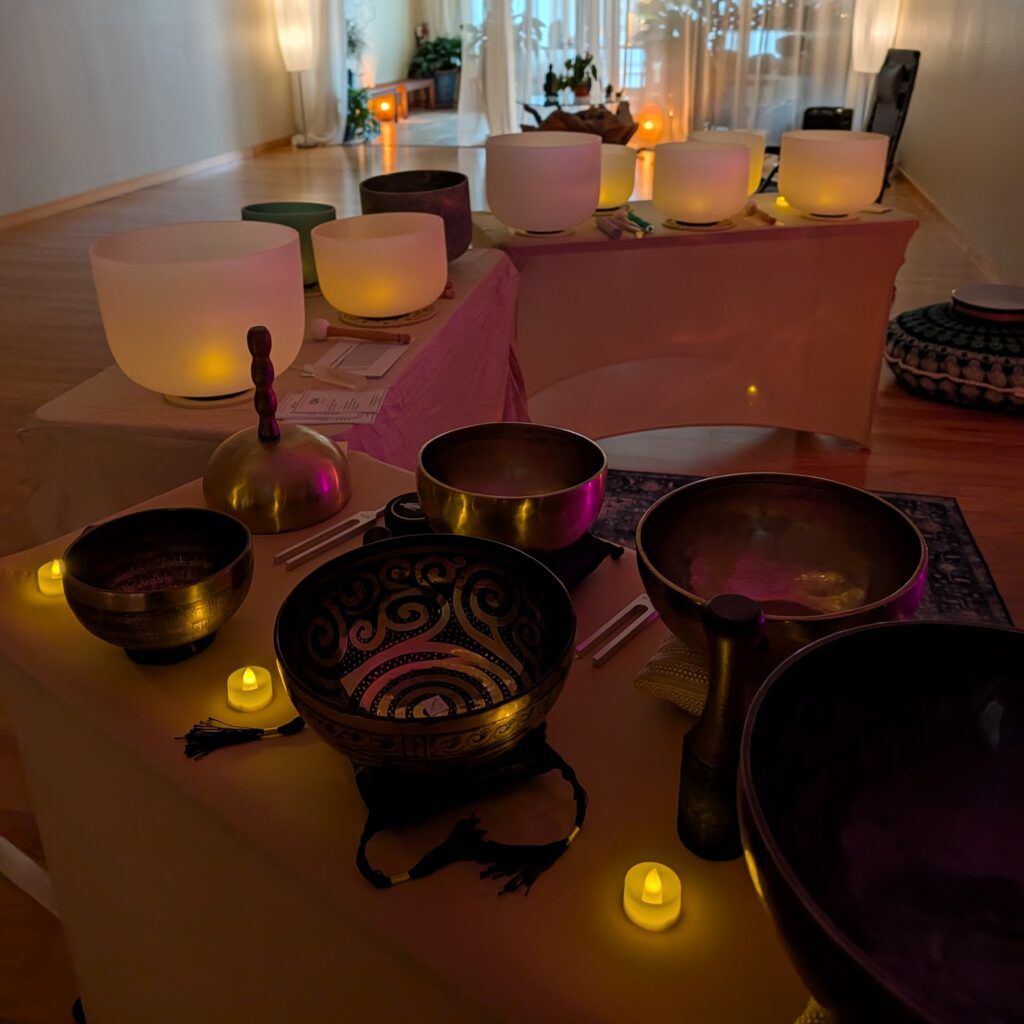
In Tibet, metal singing bowls have been used for centuries as instruments of meditation and healing. Their sustained, multi-tonal resonance is understood to calm the mind, open the energy field, and support deep states of inner stillness.
Today, these ancient traditions are meeting a growing body of scientific research that is beginning to explain, in physiological terms, what practitioners and patients have known experientially for thousands of years.
How Does Sound Healing Work?
People ask me this all the time, and I love the question because the answer is both practical and genuinely fascinating. Sound healing works through several well-understood physiological mechanisms. When the body is immersed in therapeutic sound, measurable changes occur at the level of the nervous system, the brain, the cardiovascular system, and the cells. Here are five ways sound healing works in our bodies and minds.
1. Resonance and entrainment
Research suggests that different organs, tissues, and systems in the body respond to different sound frequencies, a principle that ultrasound medicine has applied clinically for decades. Dr. Katherine Clinton, naturopathic physician and author of Optimize, describes this through quantum biology: “Each cell in every organ has its own unique vibration. These vibrations can orchestrate communication, energy transfer, and biological function in the body at a speed and efficiency unheard of in the current chemical mechanical model.” When stress, illness, or trauma disrupts the body’s natural vibratory rhythms, it moves out of coherence. Therapeutic sound works through the principle of entrainment , or the tendency of a stronger, more stable vibration to draw a weaker, less organized one into alignment with it.
Think of it this way: when you walk into a room where a tuning fork is ringing, your body doesn’t debate whether to respond. It simply does. That’s entrainment, and it’s one of the most fundamental principles of how sound heals. By immersing the body in sustained therapeutic frequencies, sound healing invites the body’s own rhythms to reorganize toward greater coherence and balance.
2. Nervous system regulation
Sustained tones, humming, and vocal toning directly stimulate the vagus nerve, which controls the parasympathetic nervous system. This branch is responsible for rest, digestion, and recovery. When the vagus nerve is activated, heart rate slows, breathing deepens, and the body shifts out of the stress response into a state of genuine physiological calm. This is one of the reasons people walk out of a session feeling different in their body, not just their mind.
3. Brainwave entrainment
Therapeutic sound guides brainwaves from the busy beta state, where we spend most of our day thinking and problem-solving, toward the slower alpha and theta states associated with deep relaxation, creativity, and restorative rest. This shift is one of the reasons people often describe a sound healing session as the deepest meditation they’ve ever experienced, even people who have never been able to meditate successfully before. The sound carries them there. They don’t have to do anything.
4. Cellular response to vibration
Research in the emerging field of sonomechanobiology has found that primary cilia, antenna-like protein structures on our cell membranes, respond to vibrational energy including sound. These structures function as mechanosensors, detecting and transmitting vibrational signals into the cell, altering cellular behavior in response. This suggests that sound may affect us not just neurologically and emotionally, but at the cellular level as well.
5. Sine wave & crystal singing bowls
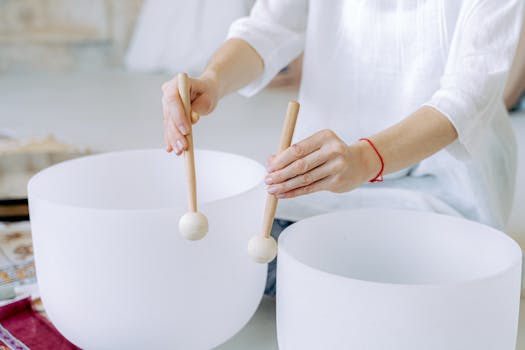
Crystal singing bowls produce a pure sine wave, which is the simplest, most fundamental form of sound, a single clean frequency with no harmonic distortion. Because of this purity, the sound travels through and around the body rather than simply reaching the ears. People often feel it in their chest, their hands, the top of their skull. This physical permeation is one reason a live sound bath with crystal bowls produces an experience that recorded audio simply cannot replicate. You are not just hearing the sound. Your body is receiving it.
Sound therapy for anxiety — learn how sound healing calms the nervous system →
What Are The Benefits of Sound Healing?
People come to sound healing therapy for many different reasons. They may be dealing with stress, anxiety, or just feel like their body is out of balance. Research and clinical observation consistently show that sound healing supports us on multiple levels, physically, emotionally, and energetically. Here are six documented benefits:
1. Stress and anxiety relief
Sound healing activates the parasympathetic nervous system, reduces cortisol, deactivates the limbic system’s fight-or-flight response, and supports heart rate variability; all measurable markers of reduced stress and anxiety.
2. Improved sleep
By guiding brainwaves toward slower states and increasing melatonin production through vocal toning and sustained frequency, sound healing supports both the quality and depth of sleep.
3. Emotional release and processing
The vibrations of therapeutic instruments can reach areas of held emotion that talk and movement don’t always access. Many people experience a spontaneous release of grief, tension, or stored stress during sessions.
4. Pain reduction
Research on therapeutic sound frequencies, including John Beaulieu’s work on nitric oxide production through tuning forks, supports the use of sound for pain relief and inflammation reduction.
5. Enhanced meditation and mindfulness
Sound carries the nervous system toward stillness in a way that is particularly accessible for people whose minds stay active during traditional meditation. You don’t need to do anything. The sound does the work.
6. Energetic balance and chakra alignment
In the traditions of sound healing, different frequencies correspond to different energy centers in the body. Tibetan and crystal bowls, tuning forks calibrated to specific frequencies, and vocal toning are all used to support the flow of energy through the chakra system.
Ways to experience sound healing
Sound healing is not one single experience. It shows up in many forms, from deeply personal one-on-one sessions to shared group immersions to technology-assisted environments. Here is a quick overview of the main formats:
1. Private sound healing session
A fully personalized one-on-one experience built around the individual, what they’re carrying that day, physically, emotionally, and energetically. The practitioner uses therapeutic instruments such as Tibetan singing bowls, crystal singing bowls, or tuning forks in a sequence designed specifically for that person.
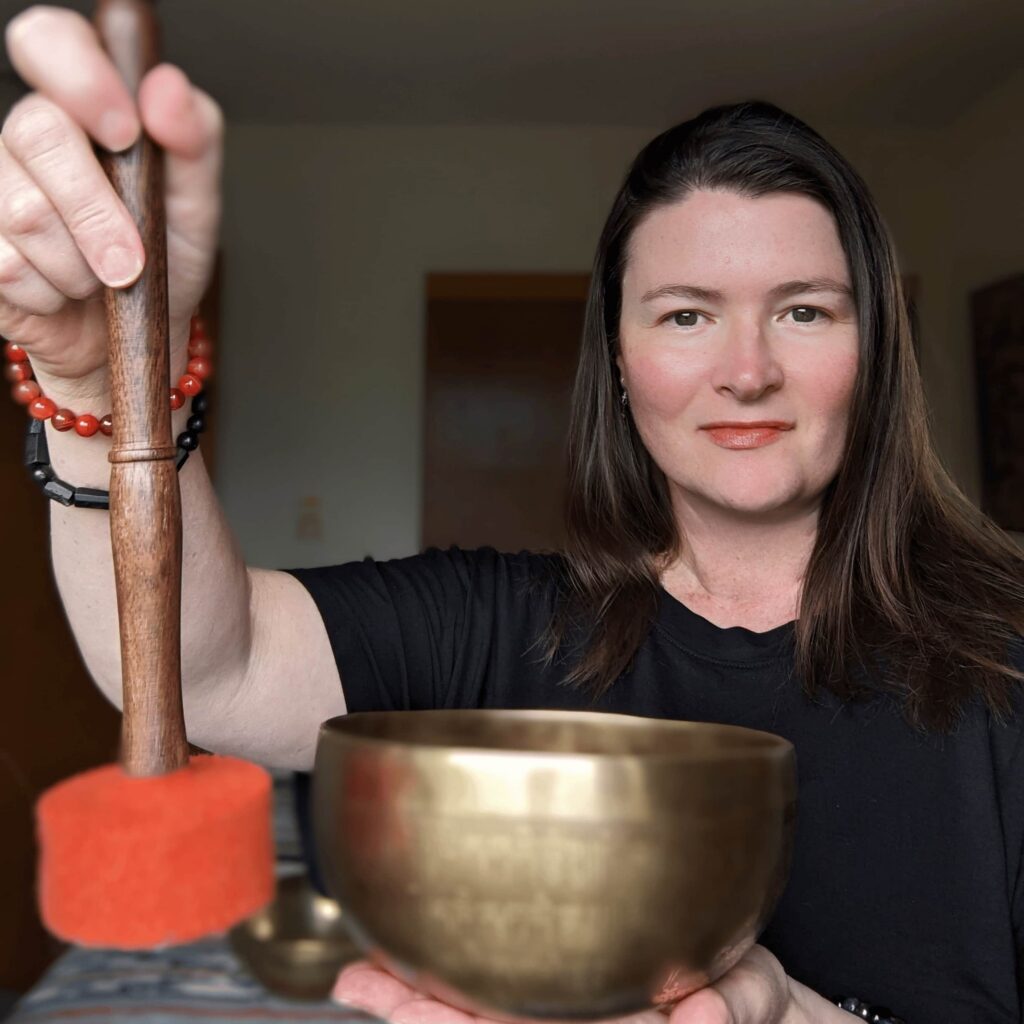
In my private sessions, I use Tibetan singing bowls and tuning forks and include a biofield assessment before and after the session, as well as a written post-session recap within 24 hours, giving clients insight into what was found, what shifted, and how to integrate the work going forward. Not all practitioners offer this level of follow-through, but I find it makes a meaningful difference for the client.
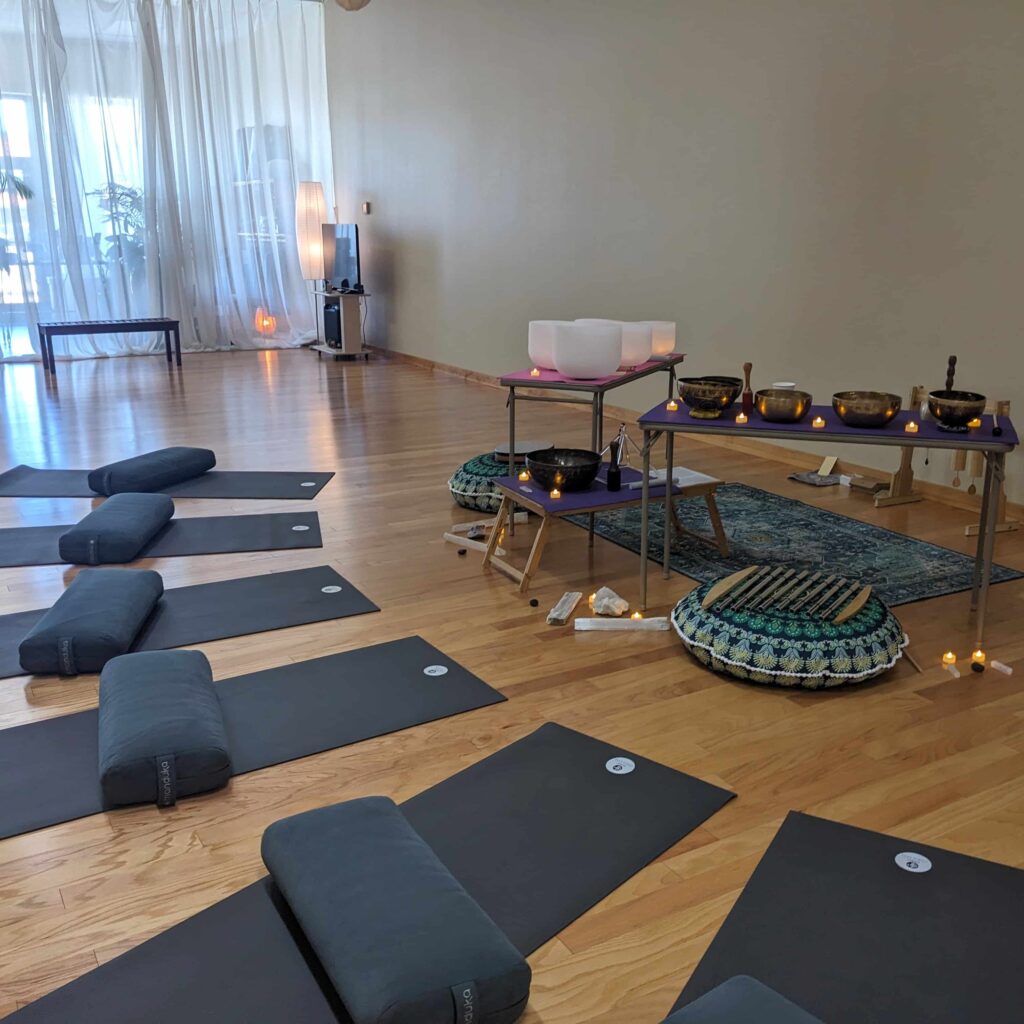
Participants lie down fully clothed while a practitioner plays live instruments. No experience required. Simply receive. The most accessible entry point into sound healing.
A facilitated group vocal toning experience using humming and sacred vowel sounds to create a shared field of resonance and calm. No singing ability required.
4. Yoga Nidra with sound
Guided yogic sleep meditation paired with live therapeutic sound as equal partners. Particularly effective for sleep difficulties, anxiety, and deep emotional rest.
5. Biofield tuning with tuning forks
Targeted, precise application of specific frequencies to the biofield and body. Allows for pinpoint work on areas of energetic congestion.
6. Vibrapoint metal bowl sessions
A specialized metal singing bowl with an ergonomic handle that delivers targeted vibrational therapy with precision to specific body points, acupressure meridians, and areas of tension. (Coming to Sound Healing Therapy with Lara soon!)
7. Vibroacoustic therapy
A technology-assisted experience in which therapeutic sound frequencies are delivered through a specialized surface or chamber, allowing vibration to be felt throughout the entire body simultaneously. The Sonosphere, located nearby in La Conner at Vibroacoustix, is a powerful example of this modality.
8. Scalar wave sessions
An immersive wellness experience in which the body rests in a room generating high scalar frequencies, a form of non-Hertzian energy associated with cellular recharging, biofield coherence, and deep restoration. I’ve experienced scalar field sessions myself and find them a fascinating complement to sound healing work.
Ready to experience sound healing in Anacortes and the Skagit County area? I offer private sessions, group sound bath events, Tone Circle™ gatherings, and workshops. Experience sound healing with Lara in Anacortes, WA →